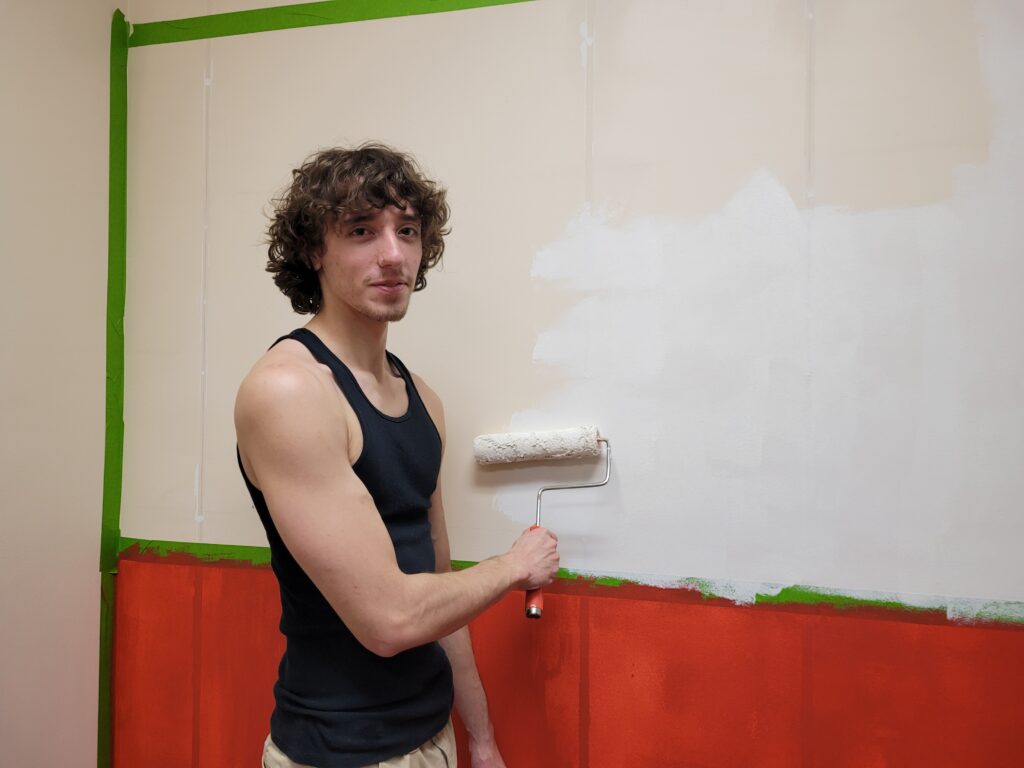
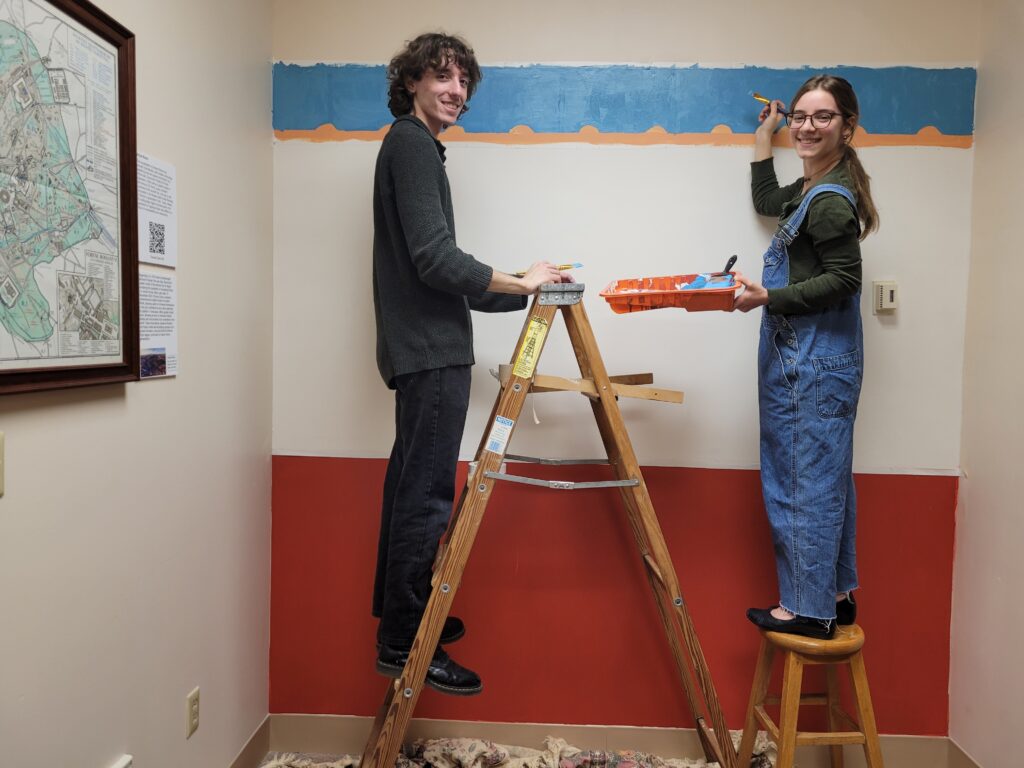
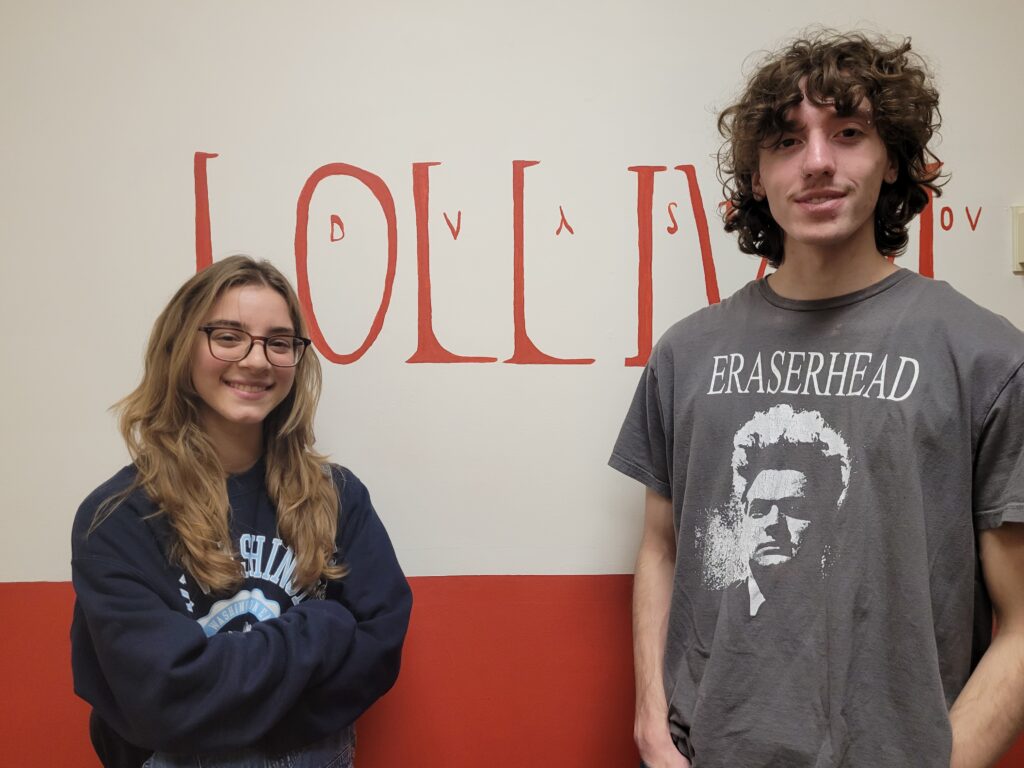
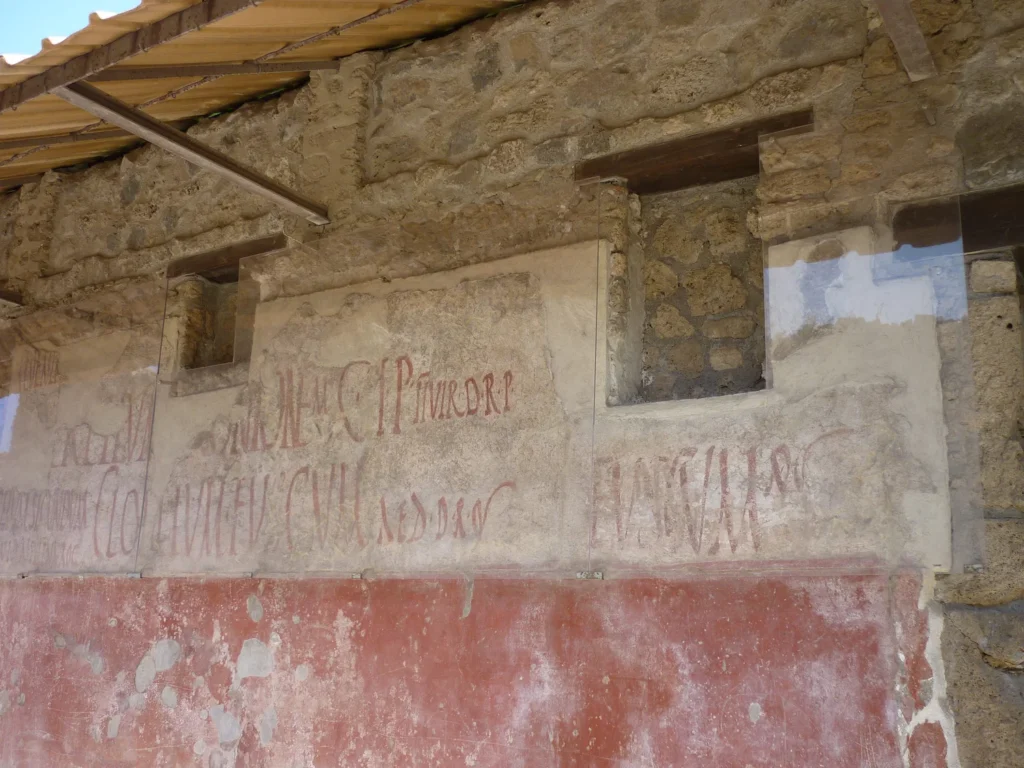
The cream and red paint on the wall on the right of the museum was inspired by the typical appearance of exterior walls in Pompeii. Such a wall, located along a street, would have formed the view from a thermopolium. The graffiti is modeled on examples from Pompeii. Graffiti communicates the authentic interests of the people who create it.
Museum Graffiti Recreations
Electoral Notice
Modeled after a graffito along the Via dell’ Abbondanza in Pompeii. Candidates would hire professionals to paint their campaign ads where the public could see them. The original painter designed an efficient notice by condensing the virtues of the candidate Lollius within the letters of his name. The letter D is for dignum, which translates to “worthy of” or “suitable for.” Lollius is worthy to manage: V[iis] (roads), A[edibus] (buildings), S[acris] (sacred buildings), and P[ublicis] (public buildings). By including the abbreviation O V F on the far right of the notice, the campaign ad asks you to elect Lollius. The whole message stood for Oro vos faciatis Lollium dignum viis, aedibus sacris, publicis. The message translates as, I beg you to elect Lollius, worthy for roads and sacred and public buildings.
Vulgar Graffiti
“Vulgar” refers to the casual, often humorous, graffiti scratched onto walls at Pompeii.
Deer & Boat– Modeled after graffiti from the House of Maius Castricius in Pompeii. Graffiti depicting animals and a wide range of interests and activities were very common.
Parody of the Aeneid– Inspired by a graffito from the House of M. Fabius Ululitremulus. The Aeneid was Rome’s cultural cornerstone. It tells the story of Aeneas, who led survivors from the Fall of Troy to Italy. Its famous opening line, arma virumque cano, Troiae qui primus ab oris, translates to “I sing of arms and the man, who first came from the shores of Troy.” Here appears a parody of this line: fullones ululamq ego cano, “I sing of launderers and a screech owl.”
Project Development Photos